
A cat’s paws are marvels of biological engineering. They act as shock absorbers for jumps, provide traction for high-speed chases, and house the sensitive nerve endings that help a cat “feel” the vibrations of their environment. However, because cats are masters at hiding discomfort, paw issues often go unnoticed until they become serious.
Quick Answer: Healthy Paws Require Regular Checks
The foundation of paw health is a weekly inspection. By routinely checking for debris, cracks, or discoloration, you can catch minor irritations before they escalate into infections. A healthy paw pad should feel firm yet pliable, and the skin between the toes should be free of redness or swelling.
Why paws are often overlooked
Pet owners often focus on a cat’s coat, teeth, or weight, but paws are frequently the “forgotten” extremity. Because cats groom themselves meticulously, many owners assume the paws are being taken care of. However, a cat’s tongue cannot trim a long nail or heal a deep crack caused by dry indoor air. Furthermore, cats instinctively hide pain, meaning they won’t always limp even if a paw pad is sore.
How to Care for Your Cat’s Paws
Checking pads and claws
Make it a habit to massage your cat’s paws during quiet time. This desensitizes them to touch, making future veterinary visits or grooming sessions much easier.
- The Inspection: Gently press the top and bottom of each toe to extend the claw.
- What to look for: Check for “tumbleweeds” of fur or litter stuck between toes, look for any signs of “stud tail” (oil buildup) reaching the paws, and ensure there are no thorns or small pebbles embedded in the pads.
Nail trimming basics
In the U.S., regular nail trimming is the standard recommendation to prevent painful snags and household damage.
- Frequency: Most indoor cats require a trim every 2–3 weeks.
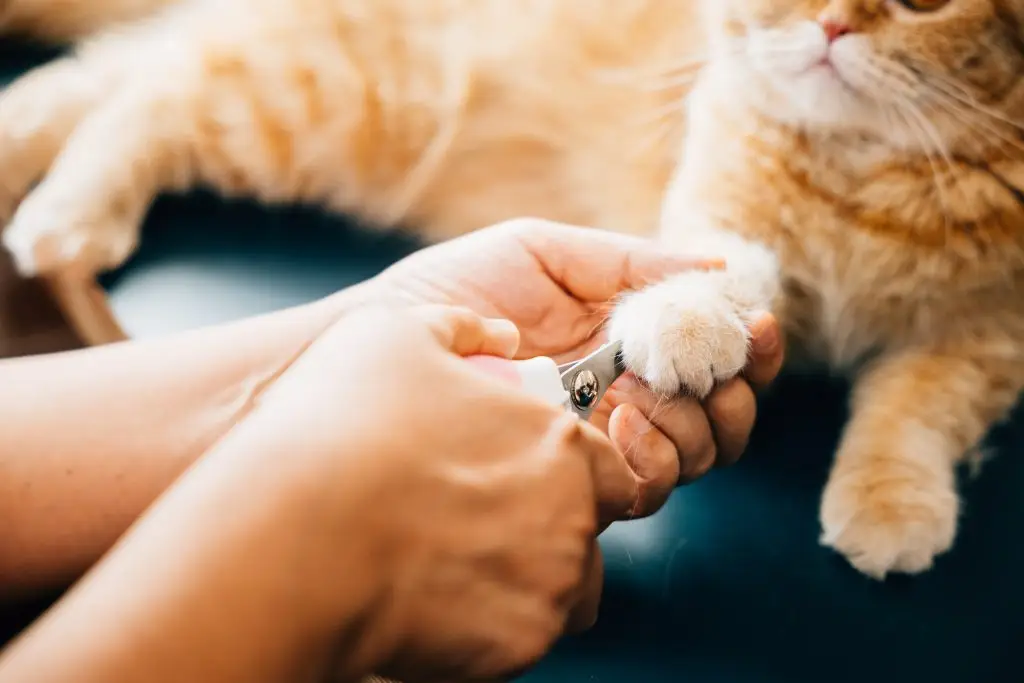
- The Technique: Use a dedicated feline scissor-style clipper. Only clip the sharp, clear tip of the nail. Avoid the “quick”—the pink area inside the nail containing blood vessels and nerves. If you have a dark-nailed cat, trim in very small increments to stay safe.
- Positive Reinforcement: Always pair nail trims with high-value treats to create a positive association.
Moisturizing dry paw pads
Central heating in the winter and air conditioning in the summer can strip the moisture from a cat’s environment, leading to dry, leathery pads.
- Safe Products: If pads feel scratchy or look “ashy,” you can apply a tiny amount of food-grade coconut oil or a specialized feline paw balm.
- Warning: Never use human lotions or essential oil-based products, as cats will lick their paws and ingest these potentially toxic ingredients.
Common Paw Problems in Cats
Cracked pads
Severe cracking can be a sign of environmental stress or nutritional deficiencies. If the cracks are deep enough to bleed, they provide an entry point for bacteria. In some cases, “pillow paw” (plasma cell pododermatitis) can cause pads to become soft, purple, and eventually ulcerated.
Overgrown nails
This is particularly common in senior cats. As cats age, they may not use scratching posts as effectively, and their nails can grow in a thick, circular fashion, eventually curling back and piercing the sensitive paw pad. This is an extremely painful condition that often requires veterinary intervention to safely remove the embedded nail and treat the resulting wound.
Cuts and infections
Even indoor cats can step on a sharp piece of a broken ornament or a stray staple. If you notice your cat licking one specific paw incessantly, or if you detect a foul odor (often described as “stinky cheese” or “sour”), an infection is likely present.
Indoor vs Outdoor Paw Care
Litter box residue
For indoor cats, the primary concern is often the litter box. Some clay-based litters can “clump” between the toes, hardening like cement and causing irritation. Switching to a low-dust or natural substrate (such as pine or paper) can alleviate this, but you should still wipe your cat’s paws if you notice they are tracking white dust around the home.
Outdoor hazards
If your cat spends time in a secure outdoor enclosure (Catio) or on a leash, they are exposed to more varied terrain.
- Pavement: During summer months, asphalt can reach temperatures high enough to burn feline paw pads in seconds.
- Chemicals: Fertilizer, lawn pesticides, and ice-melt chemicals used on walkways are highly toxic. Always wipe an outdoor cat’s paws with a damp cloth as soon as they come back inside.
FAQs
Should I clean my cat’s paws?
Yes, especially if they have walked through a spill or have visible litter stuck to them. A simple damp, warm washcloth is usually sufficient. Avoid using “human” baby wipes, as they often contain fragrances that are irritating to cats.
Do cats need paw balm?
Not every cat needs it, but it is beneficial for those living in very dry climates or for senior cats whose skin has lost elasticity. Use only products specifically labeled as “Pet Safe” or “Lick Safe.”
How often should I trim cat nails?
Every 2 to 3 weeks is the standard for most adult cats. If you hear your cat’s nails “clicking” on the hardwood floor, it’s a sign that a trim is overdue.
Professional Grooming for Total Peace of Mind
Maintaining your cat’s paws is vital for their mobility and long-term comfort. While home care is essential, sometimes a professional touch is needed to ensure those hard-to-reach areas are perfectly clean and claws are safely blunted.
Is your cat a bit “feisty” when it comes to their feet? Or are you worried about an overgrown nail? Let the experts handle it. At Precision Paws Grooming, we specialize in low-stress feline handling to keep your cat’s paws in peak condition. Book your “Perfect Paw” appointment today and give your cat the comfort they deserve!