
Most puppies can be house trained within 4 to 6 months, although some may learn the basics in as little as 4 to 8 weeks with consistent training. The exact timeline depends on the dog’s age, breed, routine, and how consistently the owner follows a training schedule
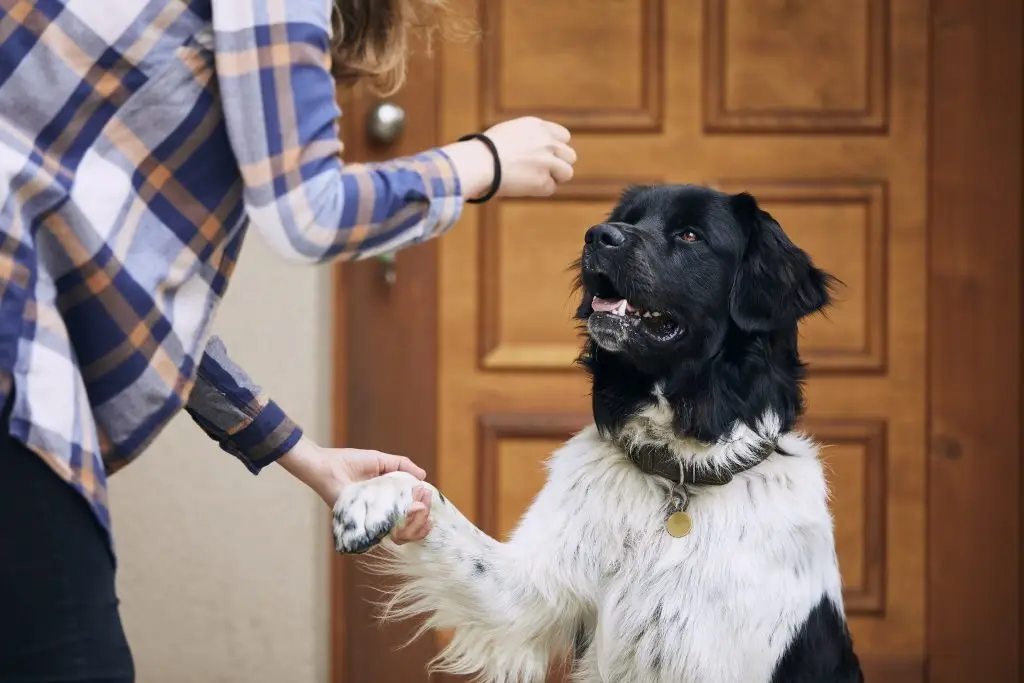
Average Timeline for Puppy House Training
Every dog is an individual, and the journey to a “potty-trained” home varies based on the developmental stage of your pet.
House training timeline for young puppies
For puppies between 8 and 16 weeks old, the process is a matter of biology. Their bladders are tiny, and they have little muscle control. At this stage, you are building the foundation of a routine, which usually takes 4 to 6 months to become fully reliable.
Training timeline for older puppies
Puppies that are 6 months or older usually have better physical control. If they haven’t been trained yet, they can often catch on to the concept in 4 to 8 weeks, provided they haven’t developed a habit of “going” indoors.
Training timeline for adult dogs
House training an adult dog (such as a rescue) can be surprisingly fast—sometimes just 1 to 3 weeks—because they can “hold it” much longer. However, if the dog has a history of neglect, it may take longer to break old habits and build trust.
How Long Does It Take to House Train a Puppy?
This is the question every new pet parent asks. The reality is that “trained” is a spectrum.
Typical timeline for most puppies
While you might see major improvements within the first month, most experts consider a puppy fully house trained only after they have gone at least one consecutive month without an accident in the house. For most, this milestone is reached around the 6-to-8-month mark.
Why some puppies learn faster than others
Factors like temperament and early socialization play a role. A puppy that was kept in a clean environment by the breeder will naturally want to keep their “den” clean, making your job much easier.
Factors That Affect House Training Time
Age of the dog
A general rule of thumb is that a puppy can hold their bladder for one hour for every month of age. A 2-month-old puppy needs a break every 2 hours, which makes the initial training phase very intensive.
Breed characteristics
Some breeds are known for their fastidious nature, while others, particularly some toy breeds, are notoriously difficult to house train due to their small bladders and a higher metabolism.
Consistency of routine
Dogs thrive on predictability. If you feed, walk, and sleep at the same time every day, your dog’s digestive system will also become predictable, significantly shortening the training time.
Training environment
Living in an apartment with three flights of stairs makes training slower than having a house with a doggy door and a fenced yard. The easier it is to get the dog to the “right” spot, the faster they learn.
Step-by-Step Guide to House Training a Puppy
Step 1: Establish a schedule
Take your puppy out first thing in the morning, after every meal, after naps, after playtime, and right before bed.
Step 2: Supervise your puppy
When indoors, your puppy should be in your sight at all times. Use a leash tied to your belt (“umbilical cord training”) or a playpen to prevent them from sneaking off to a quiet corner to have an accident.
Step 3: Use crate training
Dogs have a natural instinct not to soil where they sleep. A properly sized crate is an invaluable tool for teaching bladder control when you cannot supervise them directly.
Step 4: Choose a consistent potty spot
Always take your dog to the same area outside. The scent of previous “business” acts as a natural trigger for them to go again.
Step 5: Reward successful behavior
The moment your puppy finishes their business outside, give them high-value praise and a treat. Positive reinforcement is much more effective than any form of correction.
Signs Your Puppy Is Learning House Training
Recognizing potty signals
You’ll notice your dog starting to communicate. This could be sniffing the floor in circles, whining, pacing, or suddenly heading toward the door.
Fewer accidents in the house
The “gap” between accidents will start to grow. You’ll move from daily accidents to weekly ones, and eventually to none at all.
Going to the door or designated area
One of the clearest signs of success is when your dog independently moves toward the exit or “rings a bell” when they feel the urge to go.
Common House Training Mistakes
Punishing accidents
Rubbing a dog’s nose in a mess or yelling only teaches them to be afraid of you. This often leads to them hiding their accidents in “secret” spots like under the bed.
Giving too much freedom
Allowing a non-trained puppy to roam the whole house is a recipe for disaster. Keep their world small until they prove they can be trusted.
Inconsistent routines
If you take them out at 7:00 AM one day and 9:00 AM the next, their body cannot stay on a schedule, which leads to confusion and more accidents.
When to Seek Help From a Professional Dog Trainer
Behavioral issues
If your dog seems to be “marking” territory or going indoors due to anxiety, a professional can help identify the root cause.
Older dogs with bad habits
Adult dogs with established habits of urinating indoors often need a specialized plan that a professional trainer can provide.
Persistent accidents
If your dog is over 7 months old and still having frequent accidents despite your best efforts, it’s time to call in an expert or consult a vet to rule out medical issues like UTIs.
FAQ: House Training a Puppy
How long does it take to house train a puppy?
On average, expect 4 to 6 months for a puppy to be fully reliable, though significant progress happens in the first few weeks.
Can a puppy be house trained in two weeks?
While you can establish a strong routine in two weeks, true “reliability” usually takes longer as the puppy’s physical control develops.
What age is best to start house training?
As soon as you bring them home! Usually, this is around 8 weeks of age.
How often should a puppy go outside?
During active hours, a young puppy should be taken out every 30 to 60 minutes.
Do some dog breeds take longer to house train?
Yes. Smaller breeds like Chihuahuas or Bichon Frises often take longer because of their small bladders and high frequency of needing to go.