
Teaching your puppy to walk on a loose leash is one of the most rewarding yet challenging parts of early training. Instead of a stressful “tug-of-war,” the goal is to create a partnership where your puppy chooses to stay by your side.
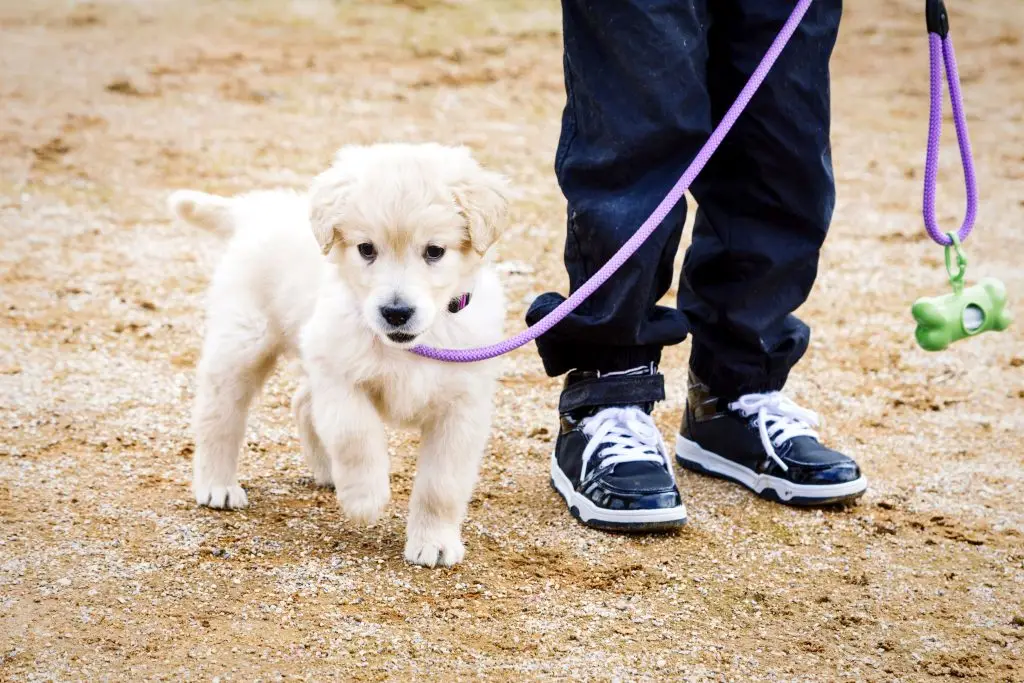
Start Here: Collar/Harness and Leash Introduction
Before you ever head out for a walk, your puppy needs to feel comfortable with their equipment. Many puppies find the sensation of a collar or the weight of a leash terrifying or annoying at first.
Let your puppy get used to wearing it first
Start by letting your puppy wear their collar or harness around the house during meal times or play. This creates a positive association. Once they stop scratching at the collar, attach a light leash and let them drag it around (under your supervision) so they get used to the feeling of something following them.
Step-by-Step Puppy Leash Training Plan
Successful leash walking is built on focus, not force.
Step 1: Practice indoors for short sessions
The “great outdoors” is full of distracting smells and squirrels. Start in your living room where it is boring. Walk a few steps; if your puppy follows, offer praise. Using a high-quality puppy obedience training leash can help you maintain a gentle connection during these early stages.
Step 2: Reward following you (build attention)
Your puppy should learn that being near your leg is the “sweet spot.” Every time they look up at you or walk beside you without tension on the leash, mark the behavior with a “Yes!” or a click. If you are looking for a durable option for these sessions, consider this heavy-duty training lead.
Step 3: Move outside gradually + keep sessions short
Puppies have short attention spans. Start with 5-minute sessions in the driveway, then move to the sidewalk. If the puppy becomes overwhelmed and stops listening, it’s a sign that the environment is too distracting or the session has gone on too long.
How to Stop Leash Pulling (Without Yanking)
It is a natural reflex to pull back when a puppy pulls forward, but this often backfires due to the “opposition reflex”—a dog’s natural instinct to pull against pressure.
Why you shouldn’t pull/yank the leash
Yanking can cause neck injuries and teaches your puppy that leash tension is a normal part of walking. It can also make them frustrated or fearful of the leash entirely.
Stop-and-reset / change direction methods
- The Red Light: The moment the leash goes taut, stop walking. Become a tree. Do not move again until the puppy looks back at you or creates slack in the line.
- The About-Face: If your puppy is pulling toward something, calmly turn 180 degrees and walk the other way. This teaches them that pulling actually moves them further away from what they want.
Puppy Problems: Biting the Leash, Zoomies, Freezing
- Biting the Leash: This is usually a sign of over-excitement or teething. Avoid playing “tug” with the leash. Instead, redirect them to a toy or ask for a “Sit” to calm their brain.
- The Zoomies: If your puppy starts running in circles frantically, they are likely overstimulated. Stand still, shorten the leash (without pulling), and wait for the “energy spike” to pass.
- Freezing: If your puppy sits down and refuses to move, don’t drag them. Crouch down, offer encouragement, and move a few feet away to entice them to come toward you.
Best Gear for Leash Training
Harness vs Collar (comfort + control considerations)
- Flat Collars: Great for holding ID tags, but can put pressure on the throat if the puppy pulls.
- Front-Clip Harnesses: These are excellent for training because they gently steer the puppy back toward you if they try to forge ahead, without putting pressure on their neck.
FAQs
When can I start leash training a puppy?
You can start “pre-training” indoors as early as 8 weeks old. Actual walks should wait until your veterinarian confirms they have had the necessary vaccinations for your area.
How long does leash training take?
Consistency is key. While a puppy can learn the basics in a few weeks, “perfect” loose-leash walking often takes several months of consistent practice as they mature.
Need Help With Leash Training in Marlborough, MA? (Golden Paw)
If you’re struggling with a puppy that pulls, freezes, or just won’t focus, you don’t have to do it alone. At Golden Paw, we specialize in helping Marlborough families turn stressful walks into enjoyable adventures.
Whether you need a one-on-one session or a structured puppy program, we are here to help your pup put their best paw forward.
Contact Golden Paw Today to Schedule Your Puppy Training Consultation!