
As more “adventure cat” content surfaces online, many pet owners are curious about taking their feline friends outdoors. If you already have a small dog harness at home, you might be tempted to use it for your cat. However, before you clip on that leash, there are critical safety and anatomical factors you must consider.
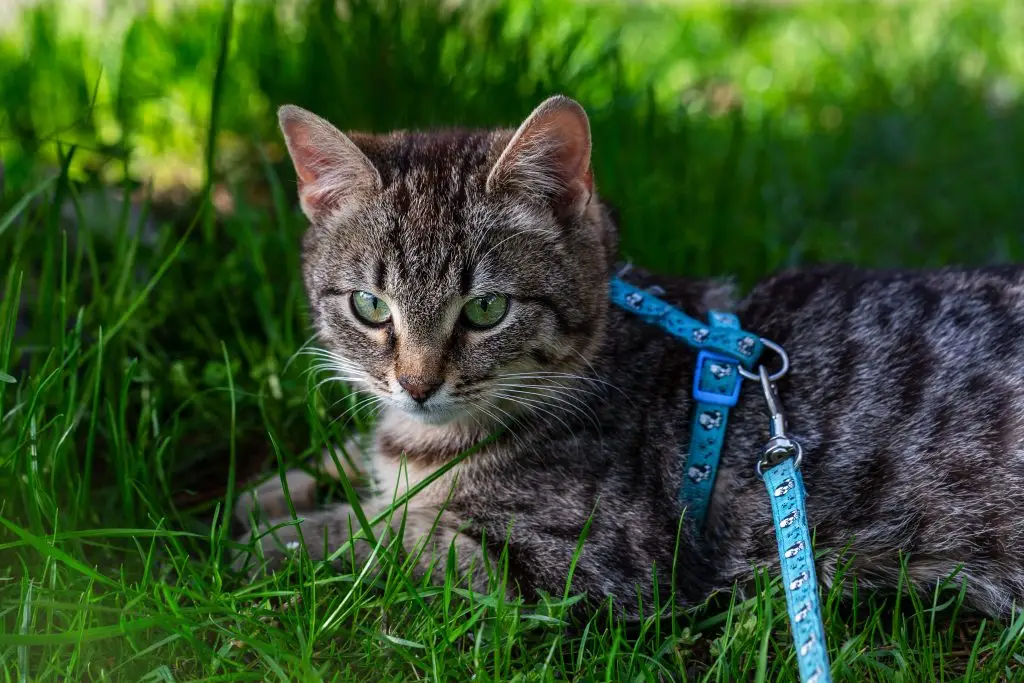
Short Answer: Is It Safe?
In most cases, no, it is not recommended to use a dog harness for a cat. While it might seem like a cost-effective solution, the design differences between the two species make dog gear a significant safety risk for felines.
Why most dog harnesses don’t fit cats properly
Dog harnesses are designed for the “deep chest” and sturdy frame of a canine. Cats have much narrower shoulders and a more cylindrical torso. Even a harness labeled “Extra Small” for dogs usually has armholes that are too large for a cat, leading to gaps where a cat can easily get a limb stuck or slide out entirely.
Escape risks and safety concerns
Cats are essentially “liquid” when they want to be. They can retract their shoulders and flatten their ribcages to slip through tight spaces. A dog harness that feels snug to a human hand is often loose enough for a panicked cat to wiggle out of in seconds, leading to a lost pet.
Key Differences Between Dog and Cat Harnesses
Body Structure Differences
Dogs have more rigid skeletal structures. Cats have “floating” shoulder blades attached only by muscle, not bone. This allows for incredible flexibility but means a harness must be specifically contoured to the feline “butterfly” shape to remain secure.
Flexibility and Escape Behavior
When a dog is scared, it often pulls forward or freezes. When a cat is scared, it often “backs out” of a harness. Most dog harnesses are not designed to prevent a backward escape, whereas high-quality cat harnesses (like “H-style” or “vest” styles) are engineered specifically to counter this backing-out motion.
Harness Positioning and Pressure Points
A cat’s neck is much more delicate than a dog’s. Many dog harnesses sit too high on the neck, risking tracheal damage if the cat leaps or lunges. A proper cat harness focuses all pressure on the breastbone and shoulders, well away from the throat.
When It Might Work (And When It Won’t)
Small dogs vs. large cats sizing
If you have a very large breed (like a Maine Coon) and a harness designed for a “Tea Cup” Chihuahua, the measurements might align. However, the width of the straps is usually the deal-breaker; dog straps are often too wide and stiff, restricting a cat’s natural range of motion.
Why fit is more important than label
If you must use a dog harness in an emergency, it must be a “vest style” with velcro and buckles. Traditional “strap-only” dog harnesses are almost never safe for cats. The fit must be “skin-tight but not squishing,” allowing only one finger to fit underneath.
How to Safely Harness Train a Cat
Introduce harness indoors first
Don’t head outside immediately. Let your cat sniff the harness, then place it on them for just a few minutes during mealtime so they associate the gear with a positive experience.
Short practice sessions
Cats often “flop and freeze” when they first feel a harness. This is a natural instinct. Use high-value treats to encourage them to take a few steps. Increase the duration by 1-2 minutes each day.
Watch for stress signals
If your cat’s tail is lashing, ears are pinned, or they are panting, remove the harness immediately. Forcing the process can create a permanent phobia of the outdoors.
Check it out: How to Put On a Dog Harness Correctly?
Common Mistakes Cat Owners Make
- Using a collar instead of a harness: Never attach a leash to a cat’s collar; they can easily choke or snap their neck.
- Leaving the harness on unsupervised: A cat can get a harness caught on furniture or a branch, leading to a dangerous “hang” situation.
- Assuming a “calm” cat won’t bolt: Even the chillest indoor cat can be spooked by a car backfiring or a neighbor’s dog.
FAQs
Can a cat slip out of a dog harness?
Yes, very easily. Because of their collarbone structure, they can rotate their front legs into the chest cavity and slide right out of most canine-specific designs.
What is the safest harness for cats?
An “H-style” harness (two loops connected by a top and bottom bar) or a dedicated feline “walking vest” with wide velcro closures and a secondary safety buckle.
Are harnesses stressful for cats?
Initially, yes. But with “Low-Stress” desensitization and positive reinforcement, most cats learn to view the harness as a “key” to the exciting world outside.
Need Help With Leash Training in MA?
If you are located in Marlborough, MA, or the surrounding MetroWest area, training a cat to walk on a leash can be a unique challenge compared to dog training. Local pet specialists can provide guidance on feline behavior and proper gear fitting to ensure your “adventure cat” stays safe. Whether you’re exploring the local trails or just your backyard, starting with the right professional advice makes all the difference.