
The “stay” command is one of the most challenging behaviors for a dog to master because it requires impulse control. While most dogs are eager to move toward their owners, “stay” asks them to remain stationary despite their natural curiosity. Mastering this skill takes patience, consistency, and a clear understanding of the Three Ds: Distance, Duration, and Distraction.
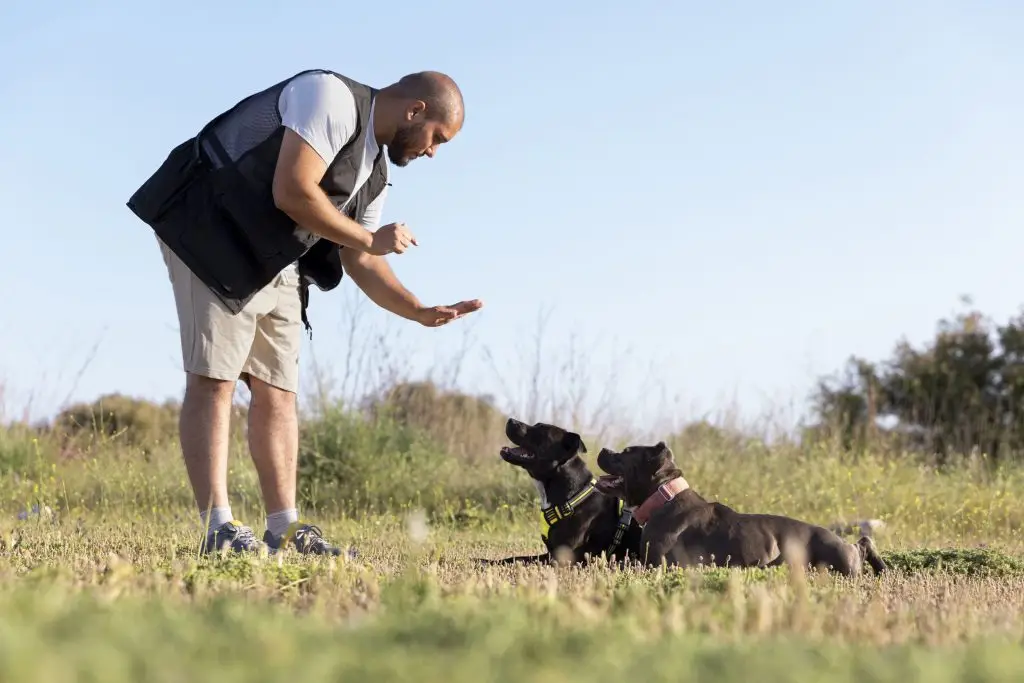
Quick Answer: Use Short Sessions and Positive Reinforcement
The most effective way to teach a stay is to start small. Begin in a quiet room with zero distractions. The goal is to reward the dog for the absence of movement. Use high-value treats and keep training sessions short—no more than 5 to 10 minutes—to ensure your dog stays engaged and doesn’t become frustrated.
Step-by-Step Training: From Beginner to Pro
Before you begin, ensure you have a “release word” ready (such as “Okay!” or “Free!”). This tells your dog exactly when the job is done.
Step 1 – Start with “Sit”
Ask your dog to sit or lie down. They should be in a relaxed, stable position before you introduce the stay. If your dog is already wiggly or jumping, wait until they settle before proceeding.
Step 2 – Add the “Stay” Command
Open your palm toward your dog’s face (like a stop sign) and say “Stay” in a calm, firm voice. Wait only two seconds. If they don’t move, immediately say your release word and give them a treat. At this stage, you are rewarding the concept of staying still.
Step 3 – Increase Distance and Duration
Once your dog understands the command, start adding difficulty one variable at a time:
- Duration: Increase the time from 2 seconds to 5, then 10, then 30.
- Distance: Take one small step back, then return to your dog and reward. Gradually increase this to several steps, and eventually, try walking out of the room for a split second.
- Distraction: Start dropping a toy or having someone else walk by. If your dog breaks the stay, go back to an easier level.
Step 4 – Reward Consistently
During the learning phase, reward every single successful stay. As the behavior becomes habitual, you can move to intermittent rewards, but always offer heavy praise. Remember: Always return to your dog to reward them rather than calling them to you, which reinforces the idea that staying put is the goal.
Common Mistakes to Avoid
- Moving Too Fast: If your dog breaks their stay frequently, you have increased the distance or duration too quickly. Go back to a distance where they are 100% successful.
- Using a “Corrective” Tone: Stay should be a positive experience. If you sound angry, the dog may become anxious and try to move toward you to appease you.
- Forgetting the Release Word: Without a release word, the dog decides when the stay is over. This leads to an unreliable command.
- Training Only Indoors: A dog who stays in the kitchen might bolt at the park. You must “proof” the behavior in various environments once the basics are mastered.
FAQ: Training the Stay Command
My dog immediately stands up when I step back. What do I do?
Lower your criteria. Instead of a full step, just shift your weight back onto your heels. Reward that tiny movement (or lack thereof). Build up to a full step slowly.
How long should a dog be able to stay?
For a well-trained family dog in the U.S., a one-minute stay is a great goal for daily life. For safety (like waiting at a door), a 10-to-30-second rock-solid stay is usually sufficient.
Can I use “Stay” and “Wait” interchangeably?
Many trainers differentiate them. “Wait” often means “wait for a moment before we go,” while “Stay” is an absolute command to remain in place until released. Using two different words can help clarify expectations for your dog.
Need Help With Pet Care or Training Reinforcement?
At Golden Paw Pet Services, we understand that a well-trained dog is a happy, safe dog. Our professional pet sitters and walkers are experienced in reinforcing the training protocols you have worked so hard to establish. We provide the consistency your dog needs to turn a “new trick” into a lifelong safety habit.
- Consistent Command Reinforcement: We use your specific cues and release words.
- Safe Walk Protocols: We practice “wait” and “stay” at every crosswalk and doorway.
- Attentive Care: We monitor your dog’s progress and keep you updated on their focus.