
Training your dog shouldn’t feel like a battle of wills; it should be the foundation of a lifelong language between you and your pet. Positive reinforcement is the gold standard in modern dog training, favored by behaviorists, trainers, and pet owners worldwide for one simple reason: it works by building a bond of trust rather than a wall of fear.
At Golden Paw Pet Services, we believe that training is about communication. When you understand how to reward the behaviors you want, your dog doesn’t just “obey”—they want to work with you.
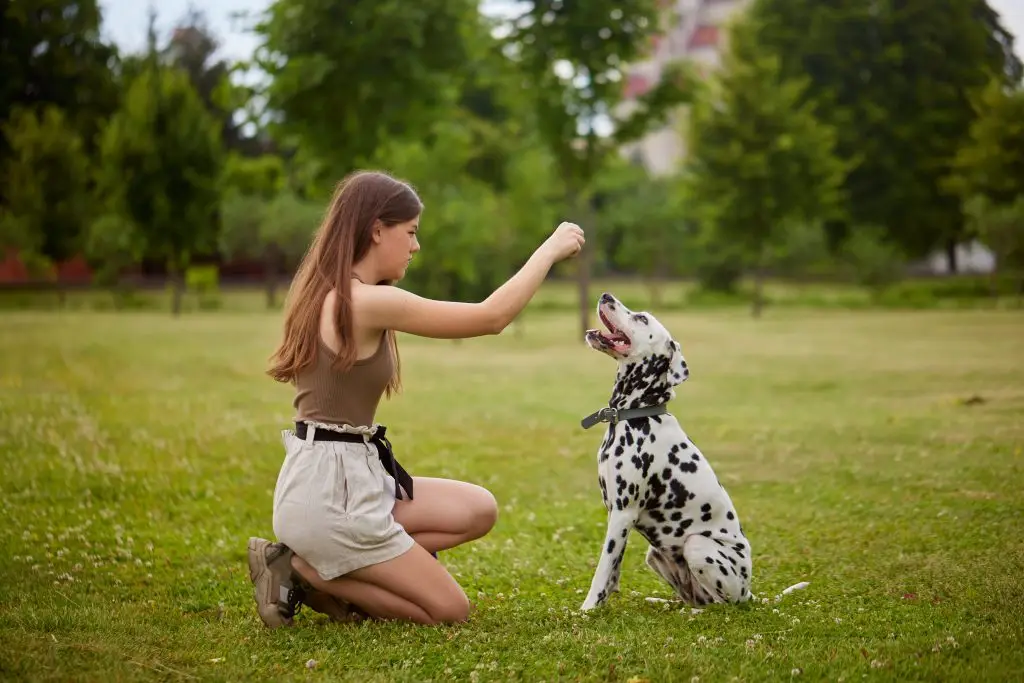
What Is Positive Reinforcement Dog Training?
In simple terms, positive reinforcement means “rewarding what you like.” When your dog performs a desired behavior, they receive something they find valuable immediately afterward. This creates a powerful connection in the dog’s brain: “When I do X, I get Y, so I will choose to do X more often.”
- The Key to Success: Timing. The reward must happen within a second or two of the action.
- Consistency: Every member of the household must be on the same page. If one person rewards jumping and another corrects it, the dog will become confused and training will stall.
How Positive Reinforcement Works
Training is about creating an environment where the “right” choice is the most rewarding choice for your dog.
- Beyond Treats: While food is often the most effective motivator for new skills, “rewards” also include verbal praise, a favorite toy, or even “life rewards” like being allowed to go outside or sniff a bush on a walk.
- The “Marker”: Using a clicker or a specific word like “Yes!” acts as a bridge. It tells the dog, “That exact moment you just did is what earns you the treat.” This creates incredible precision in your training.
What Behaviors Can It Teach?
Positive reinforcement is surprisingly universal. You can teach almost anything through reward-based methods:
- Essential Obedience: Sit, stay, and come.
- Real-World Manners: Loose-leash walking, staying calm when visitors arrive, and waiting at the door.
- Confidence Building: For nervous or shelter dogs, reward-based training is essential. It empowers them to make choices and get rewarded for being brave, which naturally builds their confidence in new environments.
Positive Reinforcement vs. Punishment-Based Training
There is a distinct, scientific difference in the outcomes of different training philosophies:
- The Problem with Punishment: Fear-based methods (correction or intimidation) often work by suppressing behavior. However, they don’t teach the dog what to do—they only teach them how to avoid your anger. This can cause dogs to become “shut down” or even develop unpredictable aggression because the underlying stress isn’t resolved.
- The Benefit of Rewards: Positive reinforcement creates a dog that is eager to learn. It builds a cooperative relationship where the dog feels safe, which is why it is the superior choice for long-term behavior modification.
Common Mistakes Owners Make
Even with the best intentions, it’s easy to get discouraged:
- Rewarding Too Late: If you click, then reach for the treat, then wait for your dog to sit again, you’ve lost the connection. The reward must follow the “marker” instantly.
- Inconsistent Cues: If you say “down,” “lay down,” and “off,” your dog will struggle to learn. Pick one command for one behavior and stick to it.
- Stopping Too Early: Behavior needs to be “proofed” in different environments. A dog that sits in the kitchen might struggle to sit at a busy park. Keep practicing in new places!
FAQ
Is positive reinforcement the best dog training method?
Yes. It is backed by veterinary science and behavioral studies as the most effective, humane, and sustainable method for creating a happy, well-behaved dog.
What are examples of positive reinforcement?
Giving a piece of chicken when your dog sits, playing a game of tug after a successful recall, or giving verbal praise when they walk nicely on a leash.
Can older dogs learn with positive reinforcement?
Absolutely. The old saying about “teaching an old dog new tricks” is a myth. Older dogs often have better focus than puppies and thrive on the engagement that reward-based training provides.
Should you use treats forever?
No. Once a behavior is learned, you can “fade” the treats by switching to intermittent rewards (rewarding sometimes, but not every time) and using life rewards like praise or play.
How long does reward-based training take?
It depends on the complexity of the behavior, but because it builds focus and enthusiasm, many owners find that dogs learn faster with positive reinforcement than with traditional methods.
Is your dog ready to learn, and are you ready to lead? At Golden Paw Pet Services, we specialize in reward-based training that strengthens the bond between you and your pet. We’re here to help you turn training into a fun, rewarding experience for everyone.
Contact Golden Paw Pet Services today to sign up for our professional training programs!