
Managing the paw health of a large breed dog comes with unique challenges. Their nails are significantly thicker, stronger, and often more intimidating to trim than those of smaller breeds. Choosing the right tool isn’t just about convenience—it’s about safety, precision, and ensuring your dog remains calm during the process.
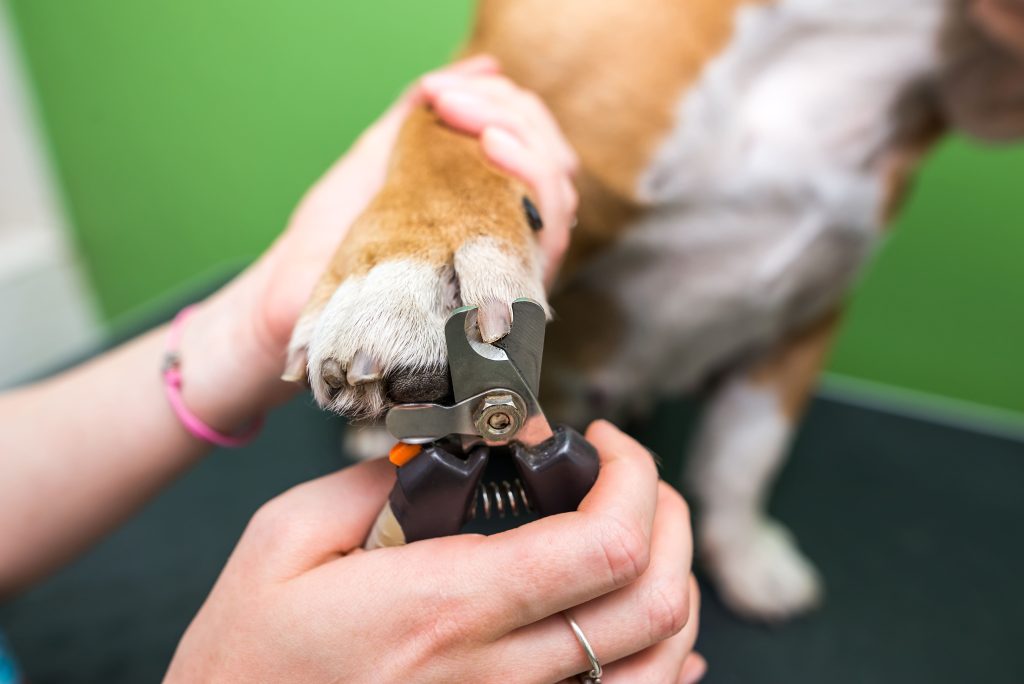
What Type of Nail Clipper Works Best for Large Dogs?
Not all clippers are created equal, especially when dealing with the density of a Golden Retriever or Great Dane’s nails.
Scissor/Plier-Style vs. Guillotine-Style
- Scissor/Plier-Style (Recommended): These are the gold standard for large dogs. They work like a pair of garden loppers, providing the leverage needed to cut through thick horn. They often feature a safety stop to prevent over-cutting.
- Guillotine-Style: These have a loop that the nail sits in while a blade slides across. While fine for small dogs, they often lack the mechanical strength to handle the diameter of a large dog’s nail and can actually crush the nail rather than cut it cleanly.
Clippers vs. Grinders for Thick Nails
- Clippers: Faster and more efficient for taking off significant length.
- Grinders (Dremels): Excellent for smoothing jagged edges and getting closer to the quick safely. Many owners of large dogs use a “cut then grind” approach for the best finish.
Vet-Assistant-Tested Picks for Large Dogs (What to Look For)
When shopping for tools, professional groomers and vet assistants look for three main criteria:
Blade Strength, Clean Cut, and Safety Guard
A dull blade will squeeze the nail, causing pain even if you don’t hit the quick. Look for high-quality stainless steel that maintains its edge. A built-in safety guard is a helpful “stop” that prevents you from inserting too much of the nail into the clipper at once.
Comfort Grip and Control
Large dogs require more force to clip. If the handle is slippery or too small, your hand might slip, leading to an accidental injury. Ergonomic, rubberized grips are essential for maintaining control.
Professional Recommendations
The Andis Pet Animal Nail Clipper is a frequent favorite in professional circles due to its heavy-duty construction and reliable spring-loaded action. For those looking for a premium, heavy-duty alternative, the Boshel Dog Nail Clippers offer a sharp, long-lasting edge specifically designed for bigger breeds.
How to Clip Large Dog Nails Without Hitting the Quick
The “quick” is the sensitive vein and nerve that runs through the center of the nail. Hitting it causes bleeding and pain, which can lead to “grooming anxiety.”
Step-by-Step Trimming Method
- Isolate the toe: Hold the paw firmly but gently.
- Angle the cut: Cut at a 45-degree angle, following the natural curve of the nail.
- Small snippets: Instead of one large cut, take off small “slices” at a time.
Dark Nails: How to Trim Gradually
Dark nails make it impossible to see the quick from the side. Look at the “cut surface” of the nail after each small snip. When you see a small, dark, moist-looking circle appearing in the center of the nail, stop. That is the beginning of the quick.
Check it out: How to Cut Dog Nails Safely?
Common Nail Trimming Mistakes (And How to Avoid Them)
- Rushing: This is the #1 cause of accidents. Set aside 15 minutes when your dog is tired.
- Dull Blades: If the nail “splinters” or “cracks” when you cut, your blades are dull and should be replaced.
- Wrong Angle: Cutting straight across can cause the nail to snag on carpets.
- Trimming Too Much: It is always better to trim a little bit every week than to try a “big trim” once a month.
When to Book a Nail Trim Instead of DIY
Sometimes, professional help is the safest route. Consider booking a professional trim if:
- Anxiety: Your dog becomes aggressive or extremely fearful at the sight of clippers.
- History of Bleeding: If your dog has thin skin or a history of clotting issues.
- Super Thick/Curled Nails: If the nails have grown into the paw pads, this is a medical issue that requires a professional or vet.
- Senior Dogs: Older dogs often have arthritis, making paw manipulation painful.
FAQs
Are grinders better than clippers for large dogs?
Grinders are “safer” because they allow you to work slowly, but they take much longer. For large dogs with very thick nails, a high-quality clipper is usually more efficient, followed by a grinder for smoothing.
How often should I trim my dog’s nails?
As a general rule: if you can hear them clicking on the floor, they are too long. For most large dogs, a trim every 3 to 4 weeks is ideal.
Does your large dog need a professional touch? At Golden Paw, we specialize in low-stress nail trims and grinding for breeds of all sizes. Click below to book a quick “Nail Only” appointment!