
If you’ve ever watched your dog tackle a complex puzzle toy, you’ve witnessed their brain working overtime. Mental stimulation is the secret weapon for a happy, calm household. At Golden Paw Pet Services, we champion interactive toys not just as a way to keep dogs busy, but as an essential part of their cognitive health. Here is how to choose the right tools to turn your dog’s playtime into a mental workout.
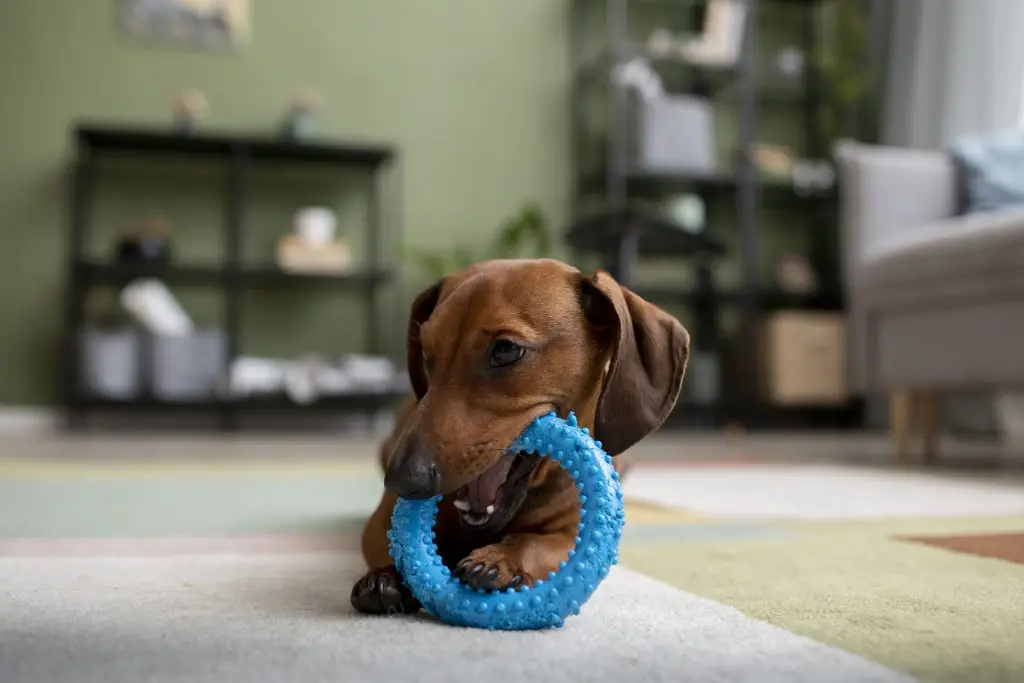
Quick Answer: What Toys Mentally Stimulate Dogs?
The best toys for mental stimulation are those that force your dog to think, problem-solve, and use their senses to earn a reward. Top contenders include puzzle feeders, snuffle mats, and treat-dispensing rubber toys. These toys tap into your dog’s natural foraging instincts, turning a simple meal into an engaging experience.
Why Dogs Need Mental Stimulation
A dog’s brain accounts for a significant portion of their energy expenditure. Just like humans, dogs can get “mental fatigue.” When they aren’t provided with challenges, they can experience cognitive decline or stress-related behaviors. Enrichment through toys helps improve focus, reduces frustration, and can even slow down fast eaters.
Types of Interactive Dog Toys
- Puzzle Toys: These feature sliding compartments or obstacles that a dog must manipulate with their nose or paws to reveal a treat.
- Treat-Dispensing Toys: Durable rubber toys (like the classic Kong) that you fill with kibble or healthy pastes; the dog must roll, chew, or push them to get the prize.
- Snuffle Mats: Fabric mats with hidden “pockets” that mimic grass. Great for dogs who love to hunt for their kibble using their nose.
- Lick Mats: Textured silicone mats designed for spreading peanut butter or yogurt. The repetitive licking motion is incredibly soothing for a dog’s nervous system.
- Tug Toys: These require human interaction. They are “interactive” in a social sense, building a bond and providing an outlet for natural instincts.
- Scent-Based Games: Think of these as “hide and seek.” Use toys that can hold a scent or simply hide a toy and encourage your dog to find it.
Interactive Toys by Personality
| Personality Type | Recommended Toy | Why? |
| Food-Motivated | Puzzle Feeders/Snuffle Mats | Food is their currency; they will work hard to solve the puzzle. |
| High-Energy | Treat-Dispensing Rubber Toys | They can roll and chase the toy while working for the reward. |
| Anxious Dogs | Lick Mats | Licking is a self-soothing behavior that helps lower heart rates. |
| Senior Dogs | Easy-Level Puzzles | Keep it accessible so they don’t get frustrated by mobility issues. |
| Puppies | Durable Rubber/Nylon | Essential for teething; look for safe, non-toxic materials. |
How to Introduce Toys Safely
- Start Easy: Don’t start with the hardest level. If the puzzle is too difficult, your dog will lose interest or destroy the toy.
- Supervise: Always monitor your dog with new toys, especially if they are aggressive chewers. Ensure the toy is sized correctly so it isn’t a choking hazard.
- Rotate: Don’t leave all toys out at once. Rotate their toy “inventory” every few days to keep them “new” and exciting.
Frequency of Use
There is no strict rule, but daily is ideal. You can replace one or two meals a day with puzzle feeding rather than using a bowl. This turns a 30-second meal into 15–20 minutes of productive cognitive work.
When Toys Aren’t Enough
Toys are a fantastic tool, but they shouldn’t be the only solution. If your dog is struggling, pair interactive play with:
- Socialization: Daycare provides the ultimate “unpredictable” mental stimulation that no toy can replicate.
- Variety in Walks: Use walks to change up the environment—new smells are the best mental workout of all.
- Training: Commands require impulse control, which is the highest form of mental stimulation.
FAQ
What toys are best for dog mental stimulation?
Interactive puzzle feeders and scent-based games (like snuffle mats) are the gold standard for getting a dog to use their brain.
Do puzzle toys actually tire dogs out?
Yes! 15 minutes of heavy mental effort is often more exhausting for a dog than a 30-minute walk.
Are interactive toys good for anxious dogs?
Extremely. Lick mats, in particular, provide a rhythmic, soothing action that helps a dog self-regulate and relax during stressful periods.
How long should a dog use a puzzle toy?
Aim for 10–20 minutes. If they are still at it after 30 minutes, the puzzle might be too difficult; if they finish in 2 minutes, it might be too easy.
What is the best enrichment toy for puppies?
Sturdy, chew-safe rubber toys that can be frozen. The cold sensation helps with teething, and the challenge of getting the food keeps them quiet and focused.
Want to give your dog the ultimate mental workout?
Our daycare environment at Golden Paw Pet Services is designed to provide all-day enrichment through play and socialization! Click here to contact us today to learn more about our daycare and training options!