
Training a dog to stop guarding food requires a shift from “control” to “collaboration.” In the modern American home, the goal is to create a “Positive Emotional Response” (PER). When you move toward the bowl, your dog’s brain should release dopamine, not cortisol.
Quick Answer: Food Guarding Improves With Controlled Training and Trust Building
Food guarding is highly treatable through Low-Threshold Desensitization. By consistently adding high-value rewards to their bowl from a safe distance, you change your role from a “competitor” to a “benefactor.” Success is built on the Gold Star principle of never taking the bowl away by force, which preserves the fragile trust necessary for behavioral change.
Why Dogs Guard Food
In 2026, canine behaviorists identify three primary drivers for food-specific guarding:
- Genetic “Hard-Wiring”: Some breeds are ancestrally predisposed to protect sustenance.
- Early Scarcity: Dogs that had to compete for milk or food as puppies often develop a “Masterpiece” of defensive habits.
- Learned Success: If a dog growled once and the human walked away, the dog learned that “aggression equals keeping my food.”
Step-by-Step Training: The “Gold Star” Protocol
Safety is paramount. If your dog has a history of biting, always consult a Golden Paw Pet specialist before attempting these steps.
1. The “Drive-By” Addition
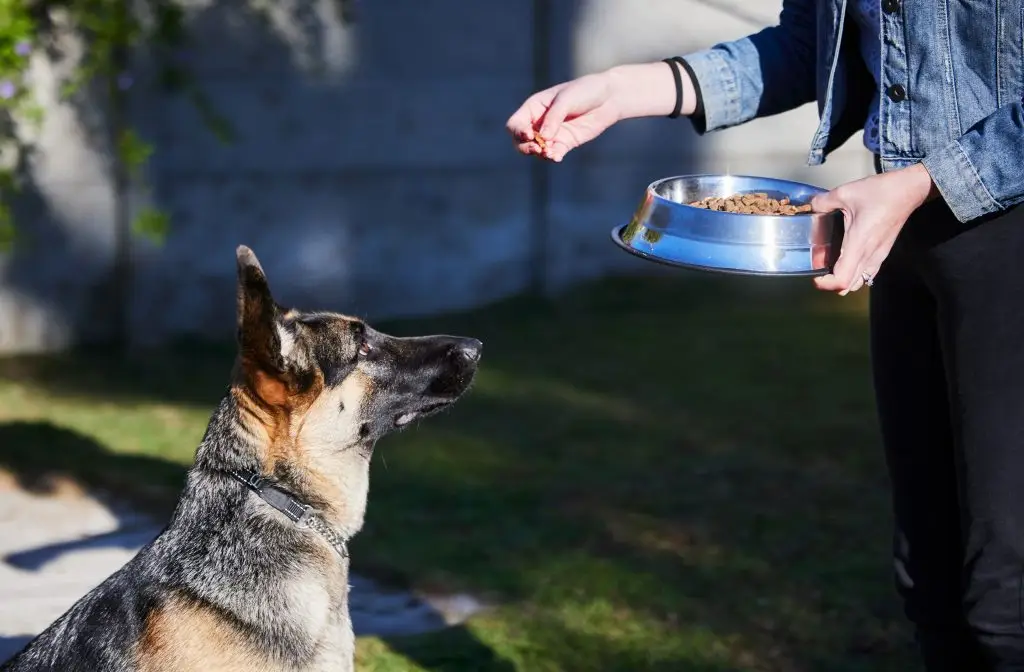
While your dog is eating their standard kibble, walk past at a distance where they remain relaxed (no freezing or stiffening). Toss a piece of super-premium food (like cooked chicken or steak) near the bowl and keep walking. Do not stop; do not look them in the eye.
- The Goal: You want the dog to stop eating and look for you, hoping for another “Masterpiece” treat.
2. Reward Calm Behavior
As the dog becomes comfortable with your movement, gradually decrease the distance. Continue to “add” to the bowl without ever “subtracting.” If the dog shows any signs of tension, you have moved too close, too fast. Return to the previous “Gold Star” distance.
3. Build Trust with “Hand-In” (Advanced)
Only once the dog is actively wagging and happy to see you approach should you attempt to drop a treat directly into the bowl. Never reach for the bowl. Simply drop the treat from a standing position and move away. You are reinforcing the idea that your hand near the bowl only brings “addition.”
What NOT to Do: Avoiding the “Conflict Trap”
- The “Alpha” Bowl Takeaway: Never take the food bowl away mid-meal to “show them who’s boss.” In 2026, we know this is the #1 way to create or worsen food guarding. It teaches the dog that you are unpredictable and untrustworthy.
- Hand-Feeding as Punishment: Hand-feeding can be a great bonding tool, but forcing a guarding dog to eat only from your hand can increase their anxiety and frustration.
- Staring Down the Dog: Direct eye contact is a challenge in canine language. Keep your body language “Masterpiece” soft and your gaze averted during mealtime training.
Signs of Improvement: The “Gold Star” Shift
How do you know the training is working? Look for these 2026 “Green Flags”:
- Relaxed Body Language: Soft eyes, wagging tail, and rhythmic eating.
- The “Check-In”: The dog pauses eating and looks at you expectantly when you enter the room.
- Willingness to Move: The dog comfortably steps away from the bowl when you approach to receive a higher-value treat.
FAQ: Food Aggression Insights
Why does my dog growl at food?
Growling is a warning that the dog feels threatened. In 2026, we treat this as a “Distance-Increasing Signal.” The dog is saying, “Please stay back; I’m afraid I’ll lose this.” It is an emotional plea, not a malicious threat.
Is food aggression dangerous?
Yes. Because food is a high-value resource, the “survival brain” can override a dog’s normal bite inhibition. This is why a Gold Star training plan focuses on safety, distance, and never provoking a defensive reaction.
Master the Mealtime with Golden Paw Pet
At Golden Paw Pet, we specialize in the technical and emotional nuances of food-related behaviors. We help you move past the stress of growling and snapping, replacing it with a Masterpiece of mutual respect and safety. Our 2026 specialist methods are designed to protect your family while giving your dog the confidence they need to enjoy their meals in peace.
- Behavioral Specialists: Experts in food-aggression modification.
- Customized Training Steps: Tailored to your dog’s specific “Gold Star” triggers.
- Safe & Humane Methods: No “dominance,” just trust-building results.
Is mealtime becoming a source of stress in your home? Contact Golden Paw Pet today for a specialist food guarding consultation and let’s bring the “Gold Star” harmony back to your kitchen!