
Walking your dog should be the highlight of your day, not a physical struggle. However, for many pet owners across the United States, the daily walk is more of a “tug-of-war” than a relaxing stroll. Teaching a dog to walk on a loose leash is one of the most challenging but rewarding skills you can impart to your canine companion.
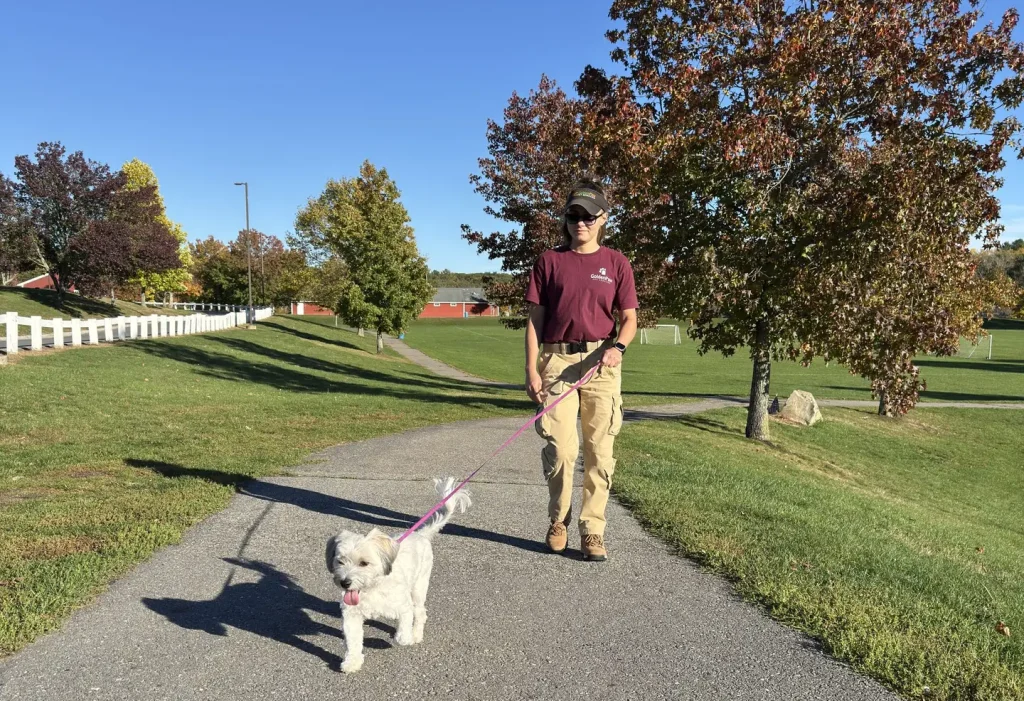
Quick Answer: Teach “Leash = Rewards” and Reinforce No-Pulling
The secret to successful leash training is simple: your dog must learn that a slack leash leads to rewards and forward movement, while a tight leash leads to a “dead end.” By rewarding your dog for staying by your side and maintaining eye contact, you reinforce the idea that being near you is the most profitable place to be.
Why loose-leash walking works
Loose-leash walking relies on the principle of negative reinforcement—the removal of pressure. When the leash is slack, the walk continues, and the dog gets to explore. When the leash becomes taut, the “fun” (the movement) stops immediately. Dogs are motivated by their environment; once they realize that pulling actually prevents them from reaching their destination, they begin to self-regulate.
How long it typically takes to see improvement
Training is a marathon, not a sprint. While some dogs grasp the concept of “staying close” within a few days of indoor practice, achieving a reliable loose-leash walk in a high-distraction environment typically takes 4 to 8 weeks of consistent daily practice. Puppies often learn faster than adult dogs with established pulling habits, but improvement can be seen at any age with the right approach.
Start With the Right Gear
In the U.S. market, there are countless options for walking equipment. Choosing the right gear can significantly reduce the physical strain on both you and your dog during the learning phase.
Collar vs. harness (front-clip vs. back-clip)
- Standard Flat Collar: Best for dogs that already know how to walk well. However, for pullers, a collar can put dangerous pressure on the trachea.
- Back-Clip Harness: Great for small breeds or dogs with respiratory issues, but it can actually encourage pulling in large breeds because it mimics a sled-pulling sensation.
- Front-Clip Harness: Often the “gold standard” for training pullers. When the dog pulls, the front attachment gently redirects their chest back toward you, making it physically difficult for them to forge ahead.
Best leash length for training (and what to avoid)
For training, a 4 to 6-foot fixed-length leash (nylon or leather) is ideal. It provides enough room for the dog to sniff but keeps them close enough for you to deliver treats and maintain control.
- What to avoid: Retractable leashes. These are generally discouraged by professional trainers during the learning phase because they teach dogs that pulling actually extends the leash, rewarding the very behavior you are trying to stop.
Step-by-Step Leash Training Plan
Step 1 — Introduce collar/harness + leash indoors
Don’t head straight for the park. Start in your living room where there are zero distractions. Put the gear on your dog and let them wear it for short periods while playing or eating. This creates a positive association: “When the harness goes on, good things happen.”
Step 2 — Teach a cue (e.g., “Let’s go”) and reward attention
With the leash on, stand still. Every time your dog looks at you, say “Yes!” or use a clicker and give a high-value treat. Introduce a cue like “Let’s go” or “With me” to signal that it is time to move together.
Step 3 — Practice inside, then in the yard, then on quiet streets
Gradually increase the “difficulty” of your environment. Moving from the quiet living room to the backyard introduces new smells. Once they can focus on you in the yard, move to a quiet sidewalk. If your dog becomes too distracted to take treats, you have moved too fast; go back a step.
Step 4 — Stop when pulling happens; reward when slack returns
The moment the leash becomes tight, stop walking. Stand like a statue. Do not jerk the leash; simply wait. When the dog turns back to look at you or steps back to create slack, reward them with a treat and the “Let’s go” cue to move forward again.
Troubleshooting: lunging, barking, and leash reactivity basics
If your dog lunges at squirrels or barks at other dogs, they are likely “over-threshold.” This means the distraction is too intense for them to learn. Increase the distance between your dog and the trigger. Work on “look at that” training, where you reward the dog for looking at the trigger and then immediately looking back at you.
Common Mistakes That Slow Progress
Inconsistent rewards
If you only bring treats “sometimes,” your dog won’t understand what they are being paid for. In the early stages, you should be rewarding your dog almost every few steps for maintaining a loose leash. As they improve, you can transition to “variable reinforcement,” rewarding every 5th or 10th step.
Walks that are too long or too distracting early on
A 30-minute walk in a busy neighborhood is exhausting for a dog that is still learning. Short, 5-to-10-minute “training sessions” are much more effective than one long, frustrating walk where the dog pulls the entire time.
FAQs
How do I stop my dog from pulling on the leash?
The “Red Light, Green Light” method is most effective. Green light (walking) only happens when the leash is loose. Red light (stopping) happens the second the leash is tight. Consistency is key—if you let them pull “just this once,” you reinforce the behavior.
Is a front-clip harness better for pullers?
Yes. By shifting the point of leverage from the neck or the back to the center of the chest, you gain more control over the dog’s direction without causing pain or choking.
Should I use a head halter?
Head halters (like the Gentle Leader) can be very effective for extremely strong pullers, as they control the head similarly to a horse’s halter. However, they require a specific desensitization process, as many dogs find the sensation on their muzzle aversive at first.
Master the Walk with Golden Paw Pet Services
Training your dog to walk perfectly on a leash takes patience, timing, and a lot of treats! If you find yourself overwhelmed or simply don’t have the time to dedicate to daily training sessions, we are here to help.
At Golden Paw Pet Services, our professional walkers and trainers specialize in reinforcing positive leash habits. Whether you need a dedicated training program or a daily walker who maintains your dog’s progress, we ensure your pet gets the exercise they need while learning the manners you want.
Stop the struggle and start enjoying your walks again. Contact Golden Paw Pet Services today to schedule a consultation or book a professional training walk!