
Teaching your dog to “sit” is more than just a trick; it is the foundation of all canine communication and manners. In the U.S., professional trainers refer to the sit as a “default behavior”—a way for your dog to ask for permission or wait patiently. It is the simplest command to teach because it utilizes a dog’s natural body mechanics, making it the perfect starting point for puppies and rescued adult dogs alike.
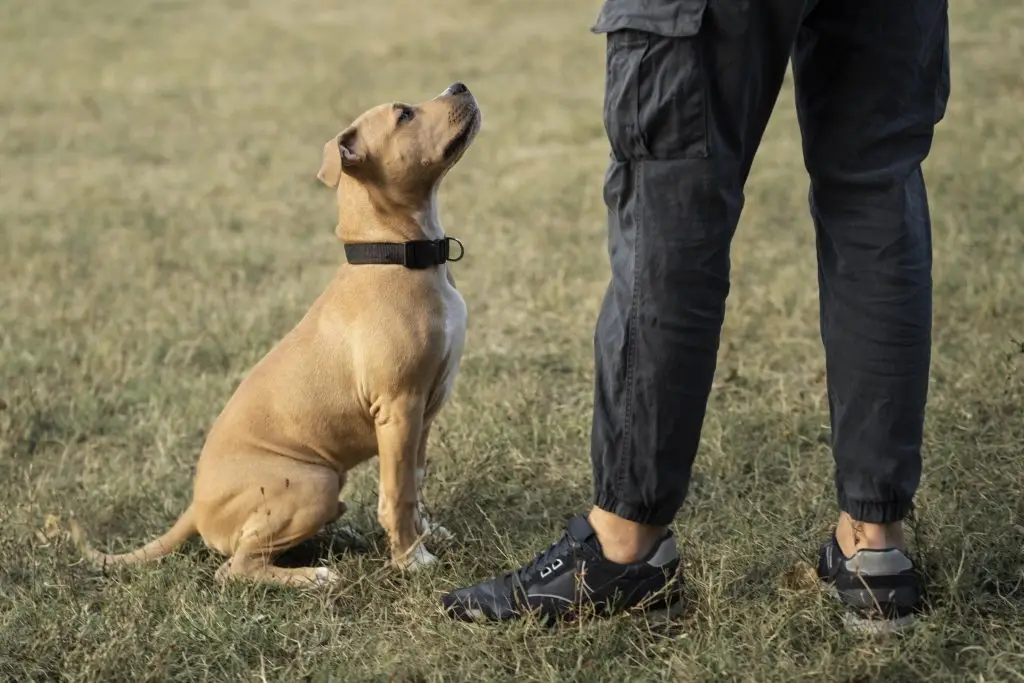
Quick Answer: Use the “Lure and Reward” Method
The most effective way to train a sit is the Lure and Reward technique. By moving a high-value treat from the dog’s nose back toward their ears, you naturally guide their center of gravity downward. As their head goes up to follow the treat, their bottom goes down. The moment their tail hits the floor, you mark the behavior with a “Yes!” or a clicker and provide the reward.
Step-by-Step Sit Training: The Lure Method
Follow these steps to ensure your dog understands the movement before you even introduce the verbal cue.
Step 1 – Get Their Attention
Hold a small, smelly treat (like a piece of freeze-dried liver or plain chicken) near your dog’s nose so they are focused on your hand. Do not let them grab it yet.
Step 2 – The Lure Motion
Slowly move your hand over the dog’s head, keeping the treat close to their snout. As they tilt their head back to keep eyes on the treat, their hindquarters will naturally lower to the ground.
Step 3 – Mark and Reward
The instant their bottom touches the floor, say “Yes!” or “Good!” and give them the treat. Repeat this 5 to 10 times without saying the word “Sit” yet, until they are doing the motion fluidly.
Step 4 – Add the Verbal Command
Once the dog is consistently sitting to follow your hand, say the word “Sit” just as you begin the hand motion. Eventually, you can phase out the hand lure and use only the verbal cue.
Step 5 – Fade the Treats
Once your dog sits 90% of the time on command, start rewarding with “life rewards” like a belly rub, a toss of a ball, or opening the door for a walk, rather than a food treat every single time.
Why “Sit” Is the First Command
In American pet culture, the “sit” is considered a safety tool and a sign of a well-adjusted pet:
- Impulse Control: It stops a dog from bolting or jumping when they are excited.
- Safety: A sitting dog is a stationary dog, which is vital at street corners or when opening the front door for a delivery.
- The “Please” Command: Many owners teach their dogs to sit automatically before getting their food bowl or having their leash put on—it’s the dog’s way of saying “please.”
Common Mistakes to Avoid
- Pushing Their Bottom Down: Never physically force your dog into a sit. This can be scary or painful, especially for older dogs with hip issues, and it prevents them from learning the muscle memory of the movement.
- Holding the Treat Too High: If the treat is too high, the dog will jump up to get it rather than sitting down. Keep the lure just an inch or two above their nose.
- Repeating the Command: Avoid saying “Sit, sit, sit!” If your dog doesn’t respond the first time, reset them by walking a few steps and try the lure again. Repeating the word teaches them they can ignore you the first three times.
FAQ: Training the Sit Command
My dog sits but immediately pops back up. What do I do?
This means you need to work on duration. Wait one second after they sit before giving the treat. Gradually increase that to three seconds, then five.
What if my dog is too excited to sit?
If your dog is jumping for the treat, hide it in your closed fist. Wait for them to stop jumping. The moment they settle and sit out of frustration or curiosity, reward that calm behavior.
At what age can I start training?
Puppies can begin learning “sit” as early as 7 to 8 weeks old. Their attention spans are short, so keep sessions under 5 minutes.
Need Help With Pet Care or Training Reinforcement?
At Golden Paw Pet Services, we know that consistency is the key to a well-behaved dog. Whether we are stopping by for a midday walk or providing overnight pet sitting, our team is happy to reinforce the positive training techniques you’ve started at home. We believe that every interaction is a training opportunity!
- Consistent Cue Reinforcement: We use the same words and hand signals you do.
- Positive Praise & Care: We ensure your dog feels successful and loved during every visit.
- Safe, Structured Walks: We practice “sit” at every curb to keep your pet safe in the neighborhood.