
Flat Buckle Collars
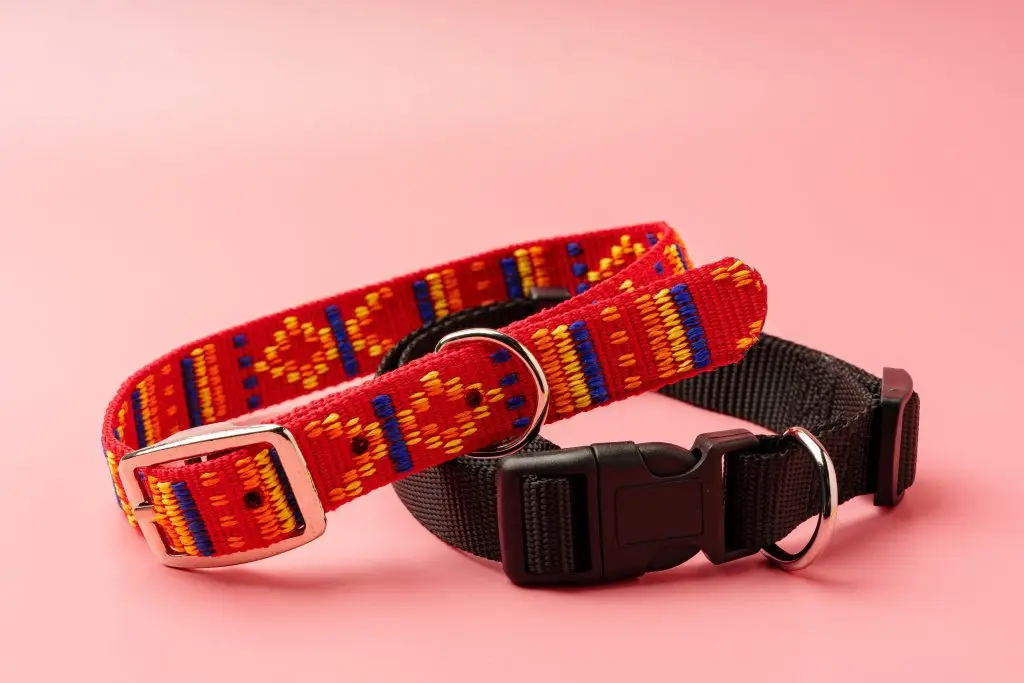
The standard flat buckle collar (available in nylon, leather, or polyester) is the most common everyday option. It features a simple side-release plastic buckle or traditional metal belt-style clasp and serves as the primary home for ID tags and rabies license attachments. While ideal for ID wear, heavy pullers can strain their tracheas when leashed to a flat collar.
Martingale Collars
Often called human choke collars, martingale collars feature a secondary loop design that gently tightens when a dog pulls, but only to a strictly limited, safe circumference. It prevents dogs with narrow heads (like Greyhounds or Whippets) from slipping out of their collars backward without applying choking pressure.
Breakaway Collars
Safety is the core purpose of a breakaway collar. Designed with a specialized quick-release mechanism that pops open under moderate tension, these collars prevent accidental strangulation or jaw entrapment if your dog gets snagged on a crate, fence, or branch while playing unsupervised. Note: Attach leashes to a separate collar during walks, as breakaway mechanisms will release if a dog pulls.
Head Collars
A head collar loops around the dog’s snout and behind the ears, functioning similarly to a horse halter. By redirecting the dog’s head and momentum forward, it gives handlers maximum steering control for large, powerful pullers without requiring raw physical strength.
Training Collars and Safety Concerns
Specialized training tools—including prong collars, slip leads, and electronic collars—require extreme caution. Aversive tools can cause physical throat trauma, soft-tissue damage, and increased behavioral reactivity if misused. For safe, humane behavioral shaping, look into professional dog training and proper leash training methods.
Best Collars for Small Dogs
Toy breeds and small dogs (such as Chihuahuas or Yorkshire Terriers) possess fragile tracheas prone to a dangerous condition called tracheal collapse. For small dogs, heavy hardware and thick straps should be avoided. Instead, opt for ultra-lightweight collars or transition to a supportive harness guide alternative for daily walks.
How to Measure Collar Fit
- Use a flexible soft tape measure to wrap around the middle of your dog’s neck.
- Ensure you can comfortably slide two fingers flat between the collar and your dog’s skin.
- If the collar slips over the dog’s ears when they lower their head, it is too loose; if it pinches the skin or leaves an indentation in the fur, it is too tight.
Collar vs Harness
Deciding whether to use a collar or harness depends on your dog’s anatomy and walking style:
- Collars: Best for ID tags, quick outdoor trips, and loose-leash walkers.
- Harnesses: Distribute pressure evenly across the chest and shoulders, making them the safest choice for brachycephalic breeds (like Pugs or French Bulldogs), heavy pullers, and active dogs. For all-day wear safety considerations, read our breakdown on harness-all-day wear.
Frequently Asked Questions
What collar is best for a small dog?
An ultra-lightweight flat collar or a soft mesh vest harness is best for small dogs to protect their delicate windpipes from pressure.
How tight should a dog collar be?
A properly fitted collar should leave enough room to comfortably slide two fingers underneath it without sliding off over the dog’s head.
Are martingale collars safe?
Yes, when properly fitted and used for walking, martingale collars provide gentle, escape-proof security without the risk of choking.
Should dogs walk on collars or harnesses?
For dogs prone to pulling, brachycephalic breeds, or small dogs, a chest harness is much safer because it prevents strain on the neck and trachea.