
We’ve all been there: you’re relaxing on the couch, and suddenly, your dog is intently licking the floor, the furniture, or your arm. While a quick lick is a normal part of being a dog, persistent, repetitive licking can be a sign that something is going on beneath the surface. At Golden Paw Pet Services, we help owners decipher these behaviors, distinguishing between a “dog being a dog” and a “dog in need.”
Quick Answer: Why Does My Dog Lick Everything?
Dogs lick to gather information, self-soothe, or interact with you. Normal licking is occasional, exploratory, or affectionate. Excessive licking—where the behavior becomes frantic, repetitive, or focused on a single spot—is often a signal of an underlying issue, such as nausea, skin allergies, stress, or boredom.
Normal Licking: Doggy Communication
- Grooming: Licking paws or fur is their natural way to stay clean.
- Exploration: The mouth is a sensory organ. Licking allows them to “taste” their environment, especially if there’s a new scent or spilled food on the floor.
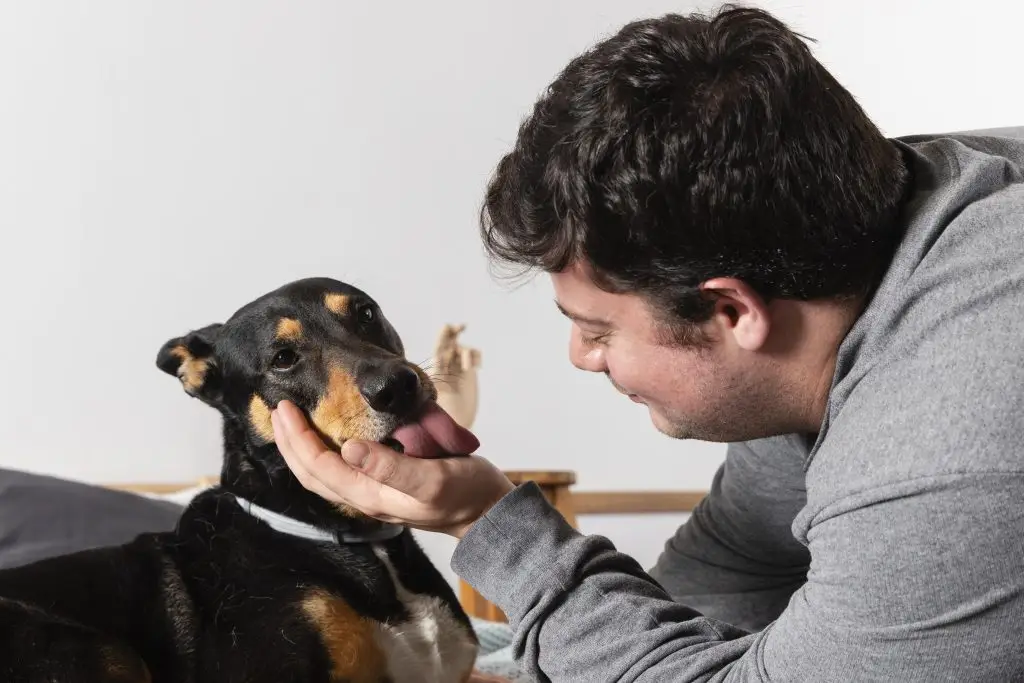
- Affection: Many dogs learn that licking their owners results in attention, making it a learned social behavior.
- Attention-Seeking: If your dog licks you when you’re busy, they’ve learned that it’s an effective way to get you to look at them.
When Licking Signals a Health or Behavioral Concern
If your dog seems “obsessed” with licking, investigate these potential triggers:
- Nausea: Dogs often lick the floor or the air when they are feeling nauseous or have acid reflux (often described as “licking the floor to soothe the tummy”).
- Allergies: If the licking is focused on the paws or skin, it’s a classic sign of environmental or food allergies.
- Pain or Injury: A dog will lick a specific spot repeatedly if they have a thorn, a hot spot, or a joint ache.
- Anxiety & Stress: Licking is a self-soothing, rhythmic behavior. Dogs often “lick-to-relax” when they feel overwhelmed.
- Compulsive Disorder: In rare cases, licking becomes a habit that the dog can no longer control, often triggered by chronic stress or confinement.
Decoding the Target
- Floors/Furniture: Often linked to nausea, boredom, or a scent they’ve picked up.
- People: Usually a sign of affection or a learned “attention-getting” tactic.
- Paws: Nearly always points to allergies, dry skin, or an injury. If they are constantly chewing/licking paws, check for redness or irritation.
How to Reduce Excessive Licking
- Rule Out Medical Issues: If the licking is sudden or focused on one area, a visit to the vet is mandatory. Rule out parasites, infections, and digestive issues first.
- Increase Enrichment: If your dog licks because they are bored, replace the time spent licking with a puzzle toy or a training session.
- Redirect with Positive Reinforcement: When you see them start to lick excessively, give them an alternative task, like a toy, and reward them for engaging with it.
- Manage Stress: If the licking is anxiety-driven, identify the trigger (noise, routine changes, etc.) and work on desensitization.
- Environment Check: Use calming scents or pheromone diffusers if you suspect anxiety is the root cause.
When to Call the Pros
If the licking has caused fur loss, skin sores, or seems impossible to interrupt, you need professional intervention.
- Vet: For medical diagnostics (skin scrapings, blood work).
- Trainer: For behavioral modification if the licking is driven by boredom or anxiety.
At Golden Paw Pet Services, we observe your dog’s behavior during daycare to see if licking occurs in social situations or only when they are left alone. This information can be vital for your vet to help reach a diagnosis!
FAQ
Why does my dog lick the floor constantly?
It is often linked to gastrointestinal discomfort (nausea or reflux) or extreme boredom. If it happens frequently, consult your vet to rule out medical causes.
Is excessive licking a sign of anxiety?
Yes, it is a common self-soothing mechanism. The repetitive, rhythmic motion releases endorphins that help the dog feel calmer.
Why does my dog lick their paws?
This is almost always related to allergies (environmental or food) or irritation. It could also be a sign of boredom or a habit they’ve formed.
How do I stop my dog from licking everything?
Start by ensuring their medical needs are met. Then, provide plenty of mental stimulation (puzzle toys, training) to keep their mouth and brain occupied with productive tasks.
When is dog licking a medical concern?
When it is obsessive, repetitive, interferes with their daily life (eating, sleeping), or has caused damage to their skin or the surface being licked.
Does your dog have a habit you just can’t shake? Whether it’s boredom or a deeper behavioral need, we’re here to help! Click here to contact Golden Paw Pet Services for a behavior assessment and let us get your pup back on track!