
A slow feeder bowl should be a long-term investment in your dog’s health. With so many options on the market, choosing the right one means balancing features like material, size, and the complexity of the maze. The ideal feeder should slow down eating significantly without causing stress or frustration.
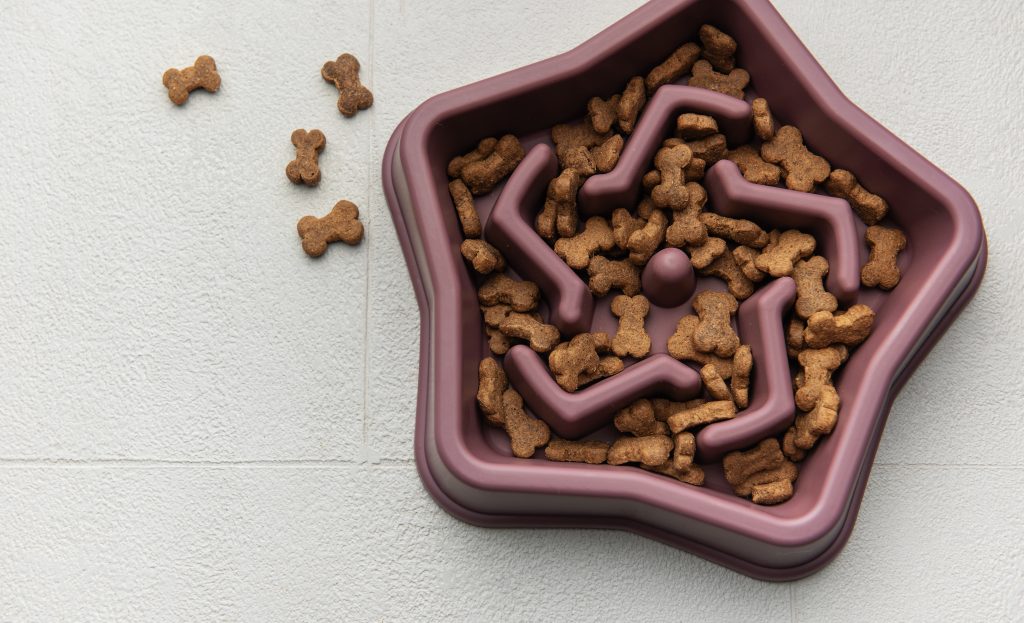
What Makes a Good Slow Feeder?
The most effective slow feeders share several key characteristics focused on stability, safety, and function.
Non-Slip Base and Durable Materials
A non-slip base is critical. If a dog has to chase the bowl around the floor, they will often become frustrated and resort to flipping the bowl over, defeating the entire purpose. Look for bowls with rubberized rings or silicone feet that grip the floor firmly.
Material choice is also important:
- Plastic/Melamine: Lightweight, inexpensive, and available in the widest variety of patterns. Ensure it is BPA-free and food-grade.
- Silicone: Flexible, quiet, and often used in mat-style feeders. Great for travel and easy to clean.
- Ceramic: Heavy and stable, making it virtually impossible to push around. However, it can chip or break if dropped.
Proper Portion Size and Maze Pattern
The internal design must match your dog’s size and eating habits:
- Size: The bowl must be large enough to hold your dog’s standard meal portion (dry or wet) comfortably, with kibble fitting below the top of the ridges.
- Pattern Complexity:
- Gentle Gobblers: Dogs who eat moderately fast can start with a simple, swirling maze pattern.
- Extreme Vacuum Cleaners: For dogs that inhale their food, look for feeders with deep, complex geometric patterns or intricate, high-walled pockets that demand maximum effort.
Popular Slow Feeder Types
Different types of slow feeders provide varying levels of challenge and durability.
Silicone Maze Bowls for Easy Cleaning
Often designed as a mat rather than a traditional bowl, silicone feeders are highly flexible. They usually feature softer, less abrasive ridges, making them a good starter option.
- Pros: Easy to clean (often bendable to fit into a dishwasher), quiet, and lightweight.
- Cons: Can be slightly easier for a determined dog to move or chew compared to hard plastic.
Stainless Steel Options for Durability
While less common, some manufacturers offer slow feeder inserts or specialized designs made from stainless steel.
- Pros: Extremely durable, cannot be chewed, naturally bacteria-resistant, and non-porous.
- Cons: Fewer design options, and the metal can be noisy against the floor if the non-slip base is inadequate.
Interactive Puzzle Feeders for Mental Stimulation
These feeders require your dog to use more than just their tongue; they involve batting, pawing, or manipulating sliding doors or spinning wheels to release the food.
- Pros: Provides significant mental enrichment, which can reduce boredom and destructive behavior.
- Cons: Often made from multiple interlocking plastic pieces, making them much harder to clean. These are best used for snacks or single meals, rather than daily use.
Benefits for Health and Behavior
Using the right slow feeder offers tangible health improvements beyond just reducing speed.
Prevents Choking and Overeating
By forcing the dog to take smaller, individual bites, the risk of choking is dramatically lowered. Furthermore, extending the mealtime allows the dog’s brain time to catch up with their stomach. This is vital because the fullness signal (satiety) takes time to register, helping to prevent the dog from feeling the need to overeat or immediately beg for more food.
Reduces Anxiety During Meals
In multi-dog households or for dogs with resource-guarding tendencies, a slow feeder can help. Because the dog has to focus intently on the complex task of extracting the food, their attention is diverted, which can sometimes reduce anxiety or hyper-focus around the food bowl. The mental exercise can also be calming, leading to a more relaxed state post-meal.
Cleaning and Maintenance Tips
Due to the intricate patterns, slow feeders require more attention during cleaning than regular bowls.
Wash After Every Meal to Prevent Bacteria
The many grooves and crevices can trap saliva, food particles, and moisture, making them prime breeding grounds for bacteria and mold. It is crucial to wash your slow feeder after every use, especially if you feed wet food or kibble moistened with water or broth.
Avoid Feeders with Deep Crevices
When selecting a bowl, look for designs where the ridges are rounded rather than sharp, and avoid any models that have overly deep, narrow crevices that are impossible to reach with a sponge or standard brush. If using a puzzle feeder with multiple parts, ensure you completely disassemble and dry every component before the next use.
FAQs
Are slow feeders safe for puppies?
Yes, slow feeders are generally safe for puppies and highly recommended. Puppies are notorious for fast eating and often ingest air, which can lead to gassiness and upset stomachs. A slow feeder teaches them good eating habits from a young age and introduces them to low-stress puzzle-solving. Just ensure the material is durable enough to withstand a puppy’s chewing during playtime.
Can slow feeders help with weight management?
Yes, indirectly. While they don’t change the calorie content of the food, they aid in weight management in two important ways:
- Increased Satiety: By forcing the dog to eat slower, the brain has time to register that the stomach is full, reducing the psychological drive to keep eating or immediately seek snacks afterward.
- Mental Exercise: The mental effort involved burns a negligible amount of calories but fulfills the dog’s need to “work” for food, which can reduce bored behavior that often leads to excessive treat-seeking.
Have you looked at any specific materials or designs yet? Knowing whether your dog is a gentle or aggressive eater will help narrow down the best slow feeder for them!
Check it out: Are Elevated Bowls Better for Dogs? Pros and Cons