
Quick Answer: Brush, Bathe, Dry, and Detangle First
Clipping a Goldendoodle at home requires patience and thorough preparation. Never clip a dirty, wet, or matted coat. You must brush, bathe, completely blow-dry straight, and line-comb every tangle out of your Goldendoodle’s fur before turning on any clippers. Cutting through matted fur causes uneven lines, skin lacerations, and severe clipper burns.
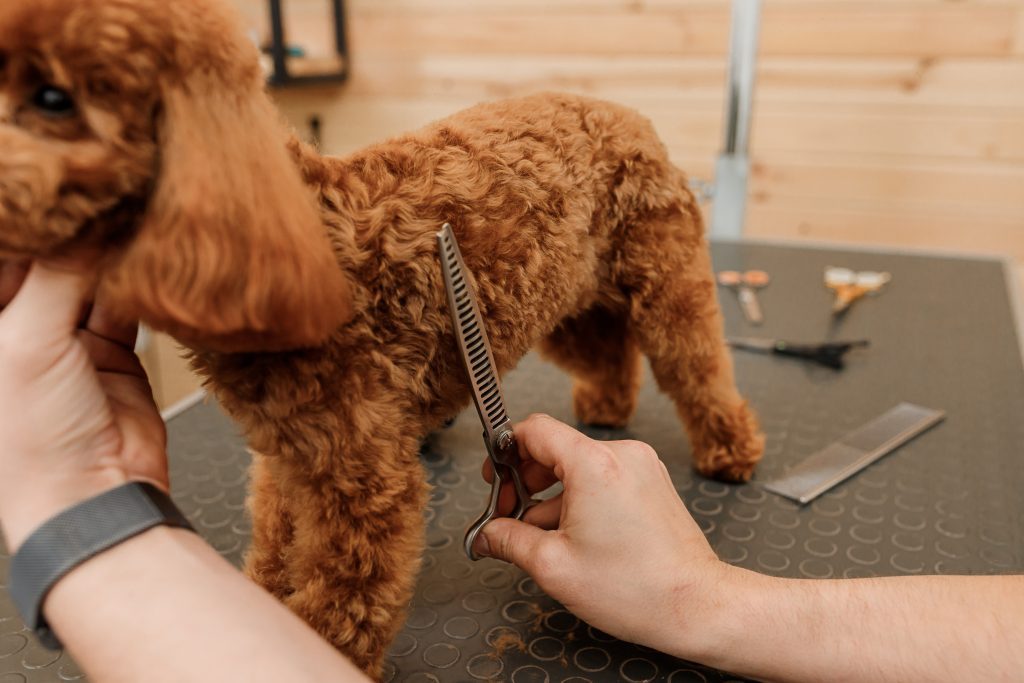
When Not to Groom a Goldendoodle at Home
You should skip a DIY grooming session and book a professional salon if:
- Your dog’s coat is pelted or severely matted down to the skin.
- Your dog shows severe aggression, extreme anxiety, or cannot remain still around buzzing blades and sharp scissors.
- You do not have the proper professional equipment (such as a forced-air pet dryer or guard combs).
Tools Needed for a Goldendoodle Haircut
- Professional-grade pet clippers with detachable blades (e.g., #10 blade for sanitary areas).
- A set of metal clipper guard combs (lengths #4 through #1).
- A slicker brush and a stainless steel greyhound comb (for line combing).
- Safety-tipped curved grooming shears and thinning shears.
- A high-velocity forced-air pet dryer.
Understanding Wavy, Curly, and Straight Coats
Goldendoodle coats vary widely based on their genetic makeup:
- Straight (Fleece/Hair): Sheds more easily, feels like retriever fur, and mats less frequently.
- Wavy (Fleece): The classic “teddy bear” texture that holds shape well but requires regular brushing to prevent tangles behind the ears and in the armpits.
- Curly (Wool): Closest to a Poodle’s coat, highly prone to tight matting if not line-combed frequently.
How to Line Brush and Check for Mats
Line combing is the gold standard for verifying a tangle-free coat:
- Use your hand to part the fur all the way down to the skin.
- Hold the base of the hair with one hand while passing your slicker brush and metal comb through the section from skin to tip.
- If the comb catches, gently work the tangle out with your fingers and slicker brush before moving on. If your comb glides smoothly from root to tip, that section is ready.
Step-by-Step Goldendoodle Trim
Body
With the coat completely brushed out and clean, attach your chosen guard comb to your clippers. Always clip in the direction of hair growth (with the grain) for a smooth, natural finish, moving systematically from the neck down the back and flanks.
Chest and belly
Carefully lift your dog’s front legs or have a helper support them. Use longer guard combs or thinning shears around the chest and underline to maintain a balanced, tidy silhouette.
Legs and feet
Trim columns down the legs. For the paws, use small grooming scissors or a #10 blade to carefully clear the fur between the paw pads to prevent slipping and debris buildup.
Face and muzzle
- Extreme Safety Warning: Never use standard straight scissors near a dog’s eyes, ears, or skin folds. Use blunt-tipped safety scissors or thinning shears only.
- Gently hold your dog’s muzzle, brush the facial hair forward, and trim in rounded shapes around the mouth and eyes to achieve the classic teddy bear look.
Ears
Comb the ear leather thoroughly and trim the hanging fringe with scissors, keeping blades safely angled away from the skin flaps.
Sanitary area
Using a #10 blade on your clippers, carefully shave the sanitary areas to maintain hygiene, taking extreme care around sensitive skin folds.
Clipper Guard Length Guide
| Guard Size | Approximate Cut Length | Best Used For |
| #1 Guard | Approx. 1/8 inch | Low-maintenance summer cuts or shorter bodies. |
| #2 Guard | Approx. 1/4 inch | Clean, tidy medium-length trim. |
| #3 Guard | Approx. 3/8 inch | Standard teddy bear body length. |
| #4 Guard | Approx. 1/2 inch | Longer, plush winter coats (requires minimal matting). |
Teddy Bear Cut vs Short Practical Cut
- Teddy Bear Cut: Features longer, rounded furnishings on the face, tail, and legs (using #3 or #4 guards) combined with a moderate body length. It requires daily brushing to maintain.
- Short Practical Cut: Uses a #1 or #2 guard all over with a shorter face trim. Ideal for active outdoor dogs or owners looking to minimize daily matting risks.
Common Grooming Mistakes
- Clipping dirty or damp fur: Dulles clipper blades instantly and causes painful skin irritation.
- Skipping line combing: Assuming the topcoat looks brushed while tight mats fester hidden near the skin.
- Rushing facial trimming: Putting scissors too close to a moving dog’s eyes.
When to Book a Professional Groomer
If home grooming becomes stressful for you or your dog, or if you encounter severe matting, trust a professional. To explore expert care, review our guide on Goldendoodle grooming cost, learn about matted dog hair safety, understand dog clippers vs human clippers, reference our doodle coat types, and book local services through our professional Goldendoodle grooming hub.
Frequently Asked Questions
What clipper guard should I use on a Goldendoodle?
A #3 or #4 guard is ideal for a classic medium-length teddy bear cut, while a #1 or #2 guard works best for a shorter, low-maintenance summer trim.
Can I cut Goldendoodle hair at home?
Yes, you can groom your Goldendoodle at home if you have the right equipment, patience, and a dog that stays calm during the process.
Should I bathe before clipping?
Yes. You must always wash, condition, and 100% blow-dry straight before clipping to protect your clipper blades and ensure an even cut.
How do I trim a Goldendoodle face?
Brush the facial hair forward, use safety-tipped shears or thinning shears, and carefully trim around the eyes and muzzle, keeping blades pointed away from the eyes.
Can I shave a matted Goldendoodle?
If mats are tight against the skin, home clippers will often jam or cut the skin. Severely matted dogs should be taken to a professional groomer to avoid accidental injury.